A couple of hairy and scary locals!
Thabazimbi – Temperatures are rising and so is spider activity in Thabazimbi. Finding a spider can be a terrifying experience for some, while others might find it most fascinating.
Wherever you find yourself on the ‘spider scale,’ when you find an unknown spider species in your home – you want to know what it is!
Platinum Bushvelder reached out to Reptile Inc.’s Petrus van Breda to find out more about the most common spiders people can identify in the area.
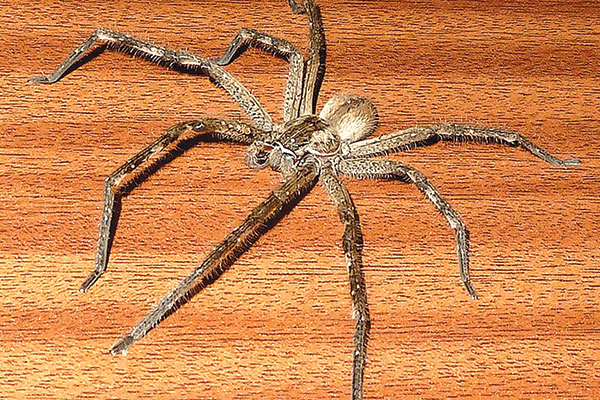
According to Van Breda, the most common spider in the Thabazimbi area is the Rain spider, Palystes superciliosus. Named after the superstition that it predicts the coming of rain, this spider is a species of huntsman spider that is native to Southern Africa.
They are the most widespread of the Palystes species and can be found in KwaZulu-Natal, Mpumalanga, Limpopo, Gauteng, Northwest, Eastern Cape, and Western Cape. With a leg span of up to 11cm, the size of these spiders gives them a fearsome and intimidating appearance. However, their bites are no worse than a bee sting; bites may itch for a while, but they are not particularly venomous.
A rain spider can often be found curled in the corner of a ceiling, or the folds of a curtain.
Another scary-looking spider that can be found in the Thabazimbi area is the Baboon spider, Theraphosidae. These exceptionally large spiders have a leg span of up to 15cm and belong to the same group as Tarantulas.
This spider’s hairy and bulky appearance makes it a very terrifying critter to find; its fangs can be over a centimetre long and its bite can be very painful. Fortunately, the bite will only hurt for a day or two, as the Baboon spider isn’t venomous. Despite its appearance, this spider is very docile and won’t bite unless it feels threatened.
#FosteringASenseOfCommunity