
Invitation for Public Comments to Repeal the Trespass Act, No. 6 of 1959
SA – On 12 August 2022 the Department of Justice and Constitutional Development issued a notice in the Government Gazette, inviting public comments on the proposed Unlawful Entry on Premises Bill, 2022 (the Bill).
The main purpose of the Bill is:
To repeal and replace the Trespass Act, No. 6 of 1959, and
To prohibit unlawful entry on premises.
Justice minister Ronald Lamola says the Trespass Act, No. 6 of 1959 has lost its relevance in the South African constitutional democracy. His department seeks to repeal the law and replace it with the proposed Unlawful Entry on Premises Bill, 2022 (the Bill).
The proposed Bill is a document consisting of seven pages, which is available on the following website:
https://www.justice.gov.za/legislation/invitations/20220812-InviteToComment-UnlawfulEnteringOnPremisesBill.pdf
The proposed Bill can be summarised as follows:
An intruder who unlawfully enters a private property or premises commits the offense of unlawful entry;
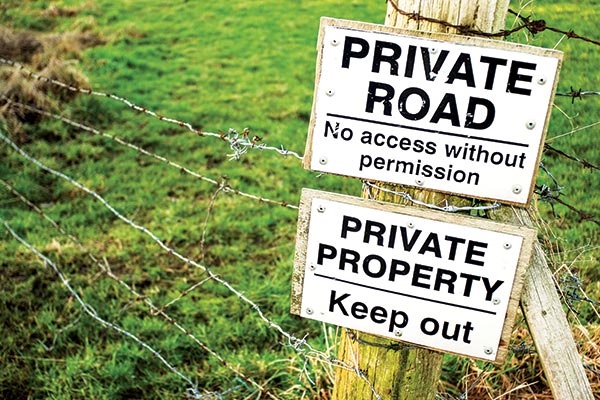
Property owners or lawful occupiers need to give notice indicating that entry is prohibited by either putting up a clear sign or giving an oral warning to the intruder;
Any intruder caught on a property or in premises without the explicit consent of the owner or lawful occupier is presumed to be trespassing;
Owners or lawful occupiers may be assisted by the police to remove intruders or trespassers;
Intruders may defend against the unlawful entry charge if there is a reasonable belief that they are entitled to legally enter the property or premises;
It is presumed that lawful access to the property or premises is granted if access to a door or gate is not prohibited, for example by leaving the door or gate open or unlocked;
Intruders found guilty of unlawful entry could face a fine or imprisonment up to two years, or both.
The Trespass Act, No. 6 of 1959 is a document consisting of two pages, which is available on the following website:
https://www.gov.za/documents/trespass-act-20-mar-1963-0000
The following amendments were made to the Act:
Sections 1 to 3 amended by Extension of Security of Tenure Act 62 of 1997
Section 2 amended by Criminal Law Amendment Act 59 of 1983
The proposed 7-page bill to replace the 2-page bill which has lost its relevance describes in detail what a person should do when a trespasser enters his property, be it the building called home, a farm or a business premises.
Several terms were also changed for example:
...unless he has lawful reason to enter... was replaced by ....the person charged reasonably believed that they had title to or an interest in the premises... and ...there is a presumption that access for lawful purposes...
Parliament is the national legislature (law-making body) of South Africa. As such, one of its major functions is to pass new laws, to amend existing laws, and to repeal old laws. Both houses of Parliament – the National Assembly and the National Council of Provinces (NCOP) – play a role in this process. Once it is signed by the President, it becomes an Act of Parliament and a law of the land.
Has this process not become just as irrelevant as the act it now wishes to replace? Should the process not be widened in the design stages of the proposed act. So that the man on the street can understand the formation of the law and so that more role-players and legal experts in the field have the opportunity to contribute... rather than give a law to be commented on which is riddled with loopholes and open for personal interpretation.
You can read through the proposed bill and give your inputs to the director general, or you can sit on the shoreline and watch the ship pass by. It is up to you. You must ask yourself: ‘Is this law doable, or would it just work on paper?’
What are the practical implications to the detail that is given in this proposed law of how a situation with an intruder should be handled?
Let’s say you opened your gate with the remote, and at the time your daughter opened the front door of the house. An intruder made use of the opportunity to gain access to your property and your house. So, following the new proposed act... the intruder might presume he/she had access because the access was not prohibited (open gate... open door).
Would the natural behaviour of the intruder/s be to listen as you speak to the intruder/s, informing them that they are not welcome and should leave? Would it be natural for you to then turn your back on the intruder, while they patiently wait for you to speak to the police, which might take a long time, as it is sometimes difficult to get through to the police?
Taking into account that the police struggle with limited resources, and that they might only be able to contact you back the following day, because they did not have an available vehicle or personnel...
Would the SAPS officer be responsible for deciding if there is any legal ‘presumption’ before removing the intruder from your house?
What if the family of your ex-husband decides to rock up on your farm and removes the signage which you have placed on the gate? You phone SAPS, but because they cannot respond immediately, the family of your ex-husband, offloads their mobile home and start planting some veggies... What would SAPS do if they get to your place? Would SAPS remove them or would SAPS wait for a court order?
At the end of the day - according to the Constitution of South Africa - which is the highest law of the land,everyone has the right to protect their property and themselves.
The public is invited to send comments to:
The Director-General: Justice and Constitutional Development, Private Bag X 81, Pretoria, 0001. Marked for the attention of Ms A Botha; or
E-mail comments to AlBotha@justice.gov.za; or
Send a fax to 012 406 4632 – Sanews.gov.za
Comments must be submitted to Ms A Botha on or before 16 September 2022. Further information can be obtained from Ms A Botha at 012 406 4762.
#FosteringASenseOfCommunity